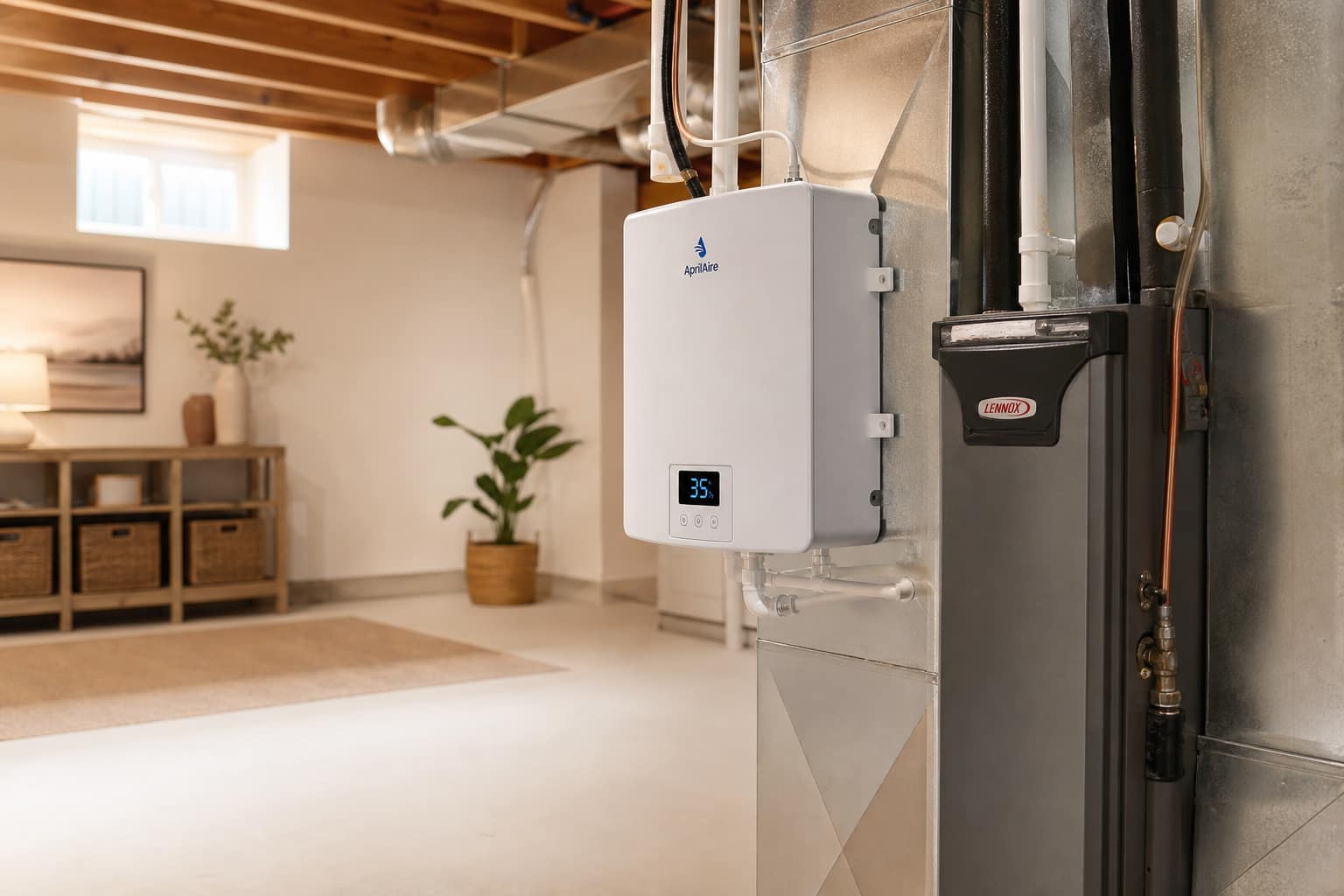
Humidifier Installation in Washington, DC
Whole-home humidifier installation in Washington, DC rowhouses and condos, sized for heat pumps, electric air handlers and tight closets.
Humidifier installation in Washington, DC means adding a whole-home humidifier to the ducted heating system in your rowhouse, condo, co-op, or attached home so every room gets comfortable moisture through the winter, and JC & JC HVAC Mechanical Contractors installs these systems across the District. Request a DC humidifier consultation and we will plan around your equipment, closet space, and building.
If your DC home heats with a heat pump or an electric air handler tucked into a closet or attic, or your older rowhouse mixes ducted systems with radiators, those details shape which humidifier will actually work. A model that performs well on a suburban gas furnace can struggle on a heat pump, and a unit that fits easily in a basement may not fit at all in a condo closet.
Why do DC condos and rowhouses get so dry in winter?
Heating cold winter air lowers its relative humidity, and in compact DC homes with forced-air heat, that dry air circulates constantly, leaving skin, sinuses, woodwork, and instruments feeling the effects.
Condos in larger buildings can be especially dry because the heating system runs often and there are few sources of added moisture. Rowhouses with older brick, original windows, and drafty top floors pull in cold outdoor air, which becomes drier once heated. People notice cracked lips, nosebleeds, static shocks, and wood floors opening up at the seams.
Protecting woodwork, floors, and instruments
If your rowhouse has original wood floors, stair rails, and trim, they can shrink and crack in very dry air. Pianos and stringed instruments go out of tune and can suffer lasting damage. Keeping winter humidity at a moderate, steady level helps protect all of them. A whole-home humidifier does this quietly through the ducts, without portable units to fill and clean in every room.
A common comfort guideline is 30 to 50 percent relative humidity. In older rowhouses with original windows, the lower end helps avoid condensation on the glass on the coldest days.
What humidifier suits an electric air handler or heat pump?
For DC homes with heat pumps or electric air handlers, steam humidifiers or fan-powered evaporative models usually work best, because they add moisture reliably even when the heated air is not very hot.
Evaporative humidifiers depend on warm air passing over a wet pad. Gas furnaces deliver hot air that evaporates water quickly, but heat pumps deliver milder air, so a basic bypass model may not add enough moisture. A fan-powered model moves more air across the pad, and a steam model produces vapor directly regardless of air temperature. Steam units need their own power circuit and a drain, which affects placement in a tight space.
For a broader comparison of humidifier types, see our general page on whole-home humidifier installation.
Rowhouses with mixed heating
Older rowhouses sometimes heat with radiators while a newer ducted system handles cooling. A whole-home humidifier needs ductwork and a blower to spread moisture, so it can only treat the parts of the home served by ducts. If your ducted system runs only in summer, we explain whether running its blower in winter with a humidifier makes sense for your layout. A frank conversation about what the house can support can save you from buying equipment that will not help.
How do you fit a humidifier in a tight DC mechanical closet?
We measure the space around the air handler and ducts, then choose a compact model and mounting position that leaves room for service access and safe water and drain connections.
A condo closet may leave only a few inches around the air handler. In those cases we may mount the humidifier on the supply duct above the unit, in a nearby soffit with an access panel, or on a duct run in an adjacent storage area. Rowhouse attic units may have more room but need careful planning so the water line and drain are protected from cold spots and from foot traffic around the hatch.
If a humidifier simply will not fit without blocking access to the air handler, we will tell you rather than force it. Service access matters because pads, canisters, and valves need attention each year.
Rowhouse attic installations
When the humidifier goes on an attic air handler, we route the water line and drain to avoid cold spots, insulate where needed, and keep everything clear of the path to the hatch. A humidifier line that cracks or leaks in the attic is a ceiling repair waiting to happen, so the extra planning pays off.
How is water supply handled in a DC condo or co-op?
We connect to the nearest suitable water line with a dedicated shutoff and add leak protection where your system calls for it.
In multi-unit buildings, plumbing work may require a brief water shutoff to a riser or floor, so check your building's rules on water shutoffs before the installation date. Steam units need a drain rated for hot water, often with a tempering device that cools the discharge, so they are not simply tied into the air conditioner condensate line. Evaporative flow-through units need a standard drain. Pads and canisters wear with use, so yearly service is part of owning a humidifier.
If you own a condo, you may wonder whether a humidifier will bother neighbors. A properly installed whole-home unit runs quietly inside your duct system and does not affect adjacent units. The main concern is water, which is why we put so much attention on valves, drains, and leak protection. Once it is set up, it runs in the background, and winter can feel more comfortable than it used to.
Does humidifier installation need a DC permit?
As the licensed contractor, we pull the permits the job requires and meet the inspector.
A steam unit that needs a new circuit and a hot-water-rated drain is a bigger job than an evaporative unit on existing power, and we explain which applies before work begins. The DC Sustainable Energy Utility (DCSEU) runs energy-efficiency programs, and it is worth checking current offerings if you are upgrading other equipment at the same time.
A new circuit for a steam unit is sized to the unit's electrical load, and its drain line needs a path that stays clear of the air handler's controls.
What to expect during your visit
We look at your heating system and closet or attic space, trace water and drain options, and recommend a humidifier that fits both the system and the space.
- System review: We check whether you have a heat pump, electric air handler, or gas furnace, and how the ducts are laid out.
- Space and plumbing check: We measure clearances and locate water and drain connections.
- Installation: We mount the unit, connect water, drain, and power, and add leak protection where needed.
- Setup: We set your humidity target and show you how to adjust it as the weather changes.
We install humidifiers for residential and small commercial customers throughout DC.
Caring for your humidifier
Plan on a check before each heating season, when we replace or clean the pad or canister, confirm the valve and drain work, and test the control. In a closet or attic installation, it helps to have someone familiar with the space handle this. Between visits, watch for white crust on the unit, water near the air handler, or a humidity reading that stays well below your setting.
Related services
- Heating repair in Washington, DC to keep your heat pump or furnace working well before adding a humidifier.
- Dehumidifier installation in Washington, DC for the muggy months.
- Air purification service in Washington, DC if your system already has a purifier that needs care.
Ready for more comfortable winter air? Contact JC & JC HVAC to schedule your DC humidifier visit. Financing is available. Ask about the Humidifier PM add-on to our VIP Comfort Club maintenance plan. Learn more about our work in Washington, DC.
Related Services in Washington, DC
Our Services
Frequently Asked Questions
Get answers to the most common questions about this service.
Still Have Questions?Related Services
Ready to Get Started?
Contact JC & JC HVAC to schedule your whole-home humidifier installation visit.