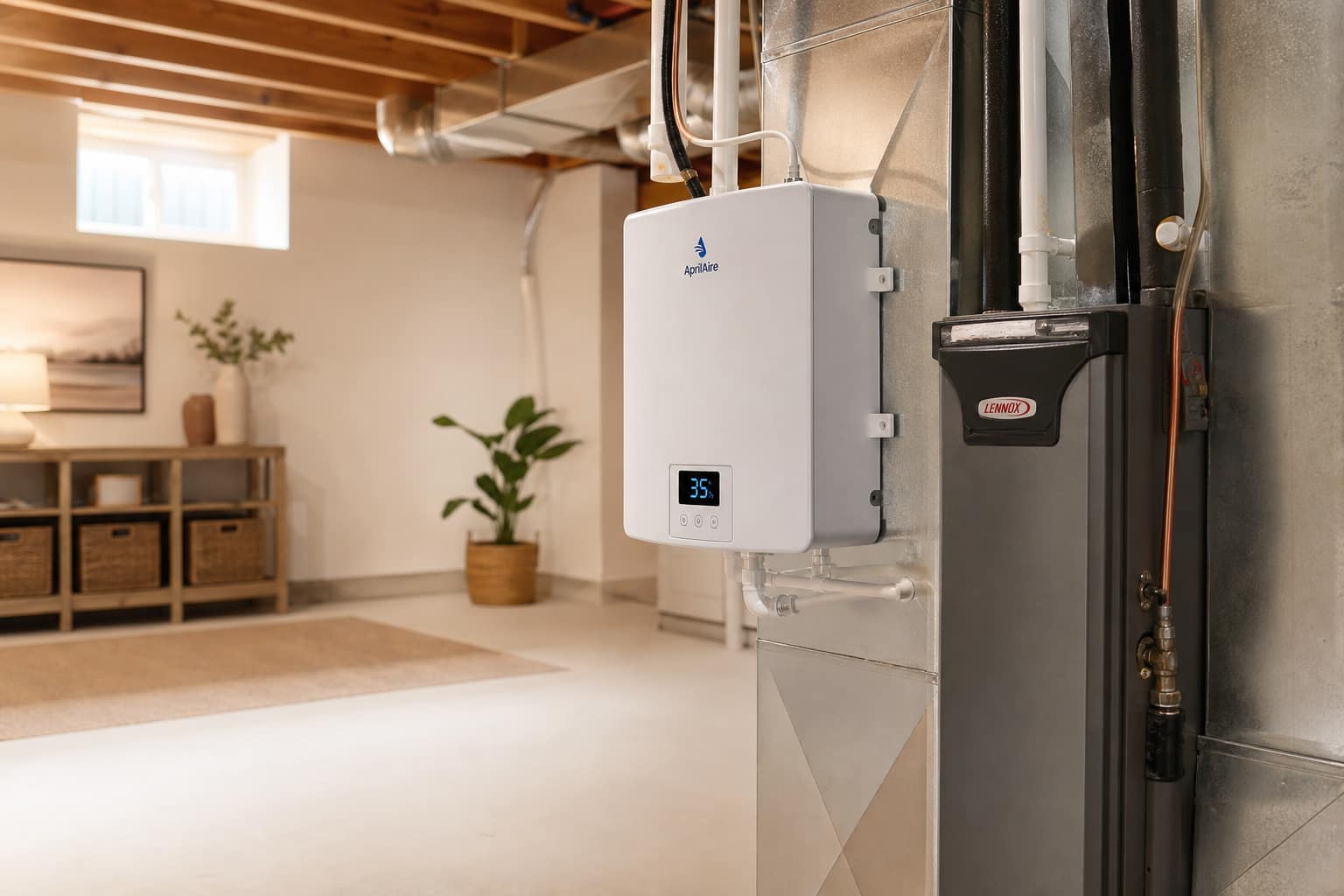
Humidifier Installation in Silver Spring, MD
Whole-home humidifier installation in Silver Spring, MD, fitted to basement gas furnaces and heat pumps in older colonials and Cape Cods.
Humidifier installation in Silver Spring, MD means adding a whole-home humidifier to your furnace or air handler so the heated air moving through your house carries comfortable moisture all winter, and JC & JC HVAC Mechanical Contractors, based in Silver Spring, MD, installs these units. Schedule a humidifier assessment and we will match the unit to your heating system and your house.
Winter in Silver Spring brings cold, dry air, and heating it makes it drier still. People notice it as static shocks, dry skin, scratchy throats, and gaps opening in hardwood floors. Older homes, from brick colonials to Cape Cods and split-levels, can let in more outdoor air than newer construction, which pulls indoor humidity down even further.
Why do Silver Spring homes dry out in winter?
Cold outdoor air holds little moisture, and when it leaks into your home and gets heated, its relative humidity drops sharply, leaving indoor air dry until moisture is added back.
If your house has original windows, a leaky attic hatch, or gaps around rim joists, it can let in a steady stream of outdoor air on cold, windy days. Every bit of that air needs heating, and once warmed it feels even drier. Portable humidifiers can help one bedroom, but a whole-home system adds moisture to every room the ducts reach. It can also replace a collection of portable humidifiers that need daily refills and frequent cleaning to stay sanitary.
Which humidifier works with a basement gas furnace?
A Silver Spring home with a basement gas furnace can often use a bypass or fan-powered humidifier mounted on the ductwork, while homes needing more output or precise control may be better served by a steam unit.
Furnace-mounted evaporative units
These units mount on the supply or return duct near the furnace and pass warm air over a water-soaked pad. Bypass models use a small duct between the supply and return, while fan-powered models have their own fan and fit where a bypass duct will not. Both rely on the furnace's warm air, which a gas furnace provides plenty of.
Steam humidifiers
Steam units boil water and inject vapor into the airstream. They deliver more consistent output regardless of air temperature, which suits larger homes, homes with heat pumps, or households that want tight humidity control. They need their own electrical supply and a drain.
For a fuller comparison of humidifier types, see our general page on whole-home humidifier installation.
Heat pumps and dual-fuel systems in Silver Spring
Not every Silver Spring home heats with a gas furnace alone. Some have heat pumps, and others pair a heat pump with a gas furnace that takes over in colder weather. Heat pumps deliver milder supply air, so an evaporative unit may add less moisture than you expect when the heat pump is running. In those homes, a fan-powered or steam humidifier often performs better. We look at how your system is set up and when each heat source runs before recommending a model.
How is a humidifier connected to water and drainage in a Silver Spring basement?
We connect the humidifier to a nearby water line with its own shutoff valve and, for models that need it, route a drain line to a floor drain, laundry standpipe, or condensate pump.
If your furnace sits near the water heater or laundry, the supply and drain runs stay short. We use a proper valve rather than a quick-tap saddle when possible, because it is more reliable over the years. As the licensed contractor, we pull the permits the job requires and meet the inspector.
Pads and steam canisters wear with use. That is normal, and it is the main reason humidifiers need yearly attention.
Choosing a location on the furnace
Placement matters. A humidifier mounted on the supply side adds moisture to air headed for the rooms, while a bypass unit draws warm air from the supply and returns it through the return duct. In basements with low ceilings or tight clearances around the furnace, we look at where the unit can mount securely, where its drain can run, and where you can reach it for yearly service. We also keep it clear of the furnace's electronics so a drip cannot land on the furnace controls.
Can added humidity harm an older colonial or Cape Cod?
Too much humidity in a cold snap can condense on windows and inside exterior walls or attics, so in older homes we set conservative targets, and a control with an outdoor sensor can lower the setting as outdoor temperatures drop.
Original windows and lightly insulated walls run cold in winter. If indoor humidity is set too high, moisture collects on the glass and can soak into sills or end up as frost in the attic. A control with an outdoor sensor adjusts automatically, so you get comfort without wet windows. A common comfort guideline is 30 to 50 percent relative humidity, with the lower part of that range often better for older homes on the coldest days.
Once the unit is running, watch how your windows respond in the first cold weeks. If you see moisture on the glass, lower the target a step and give the house a day to settle. A small change in the setting can clear the windows without giving up much comfort.
How much upkeep does a whole-home humidifier need?
A whole-home humidifier needs a yearly check before heating season, with the water panel or steam canister replaced or cleaned as it wears, plus a quick look at the drain and control.
The pad in an evaporative unit wears and needs replacement. Steam canisters also wear and need cleaning or swapping depending on the model. We also confirm the water valve opens and closes cleanly, the drain is clear, and the control responds to its sensor. At the end of heating season, you can close the water valve and the bypass damper so the unit rests through summer.
Keeping the humidifier in good shape also protects the furnace, since a leaking or overflowing unit mounted on ductwork can drip onto equipment below.
Signs your humidifier needs attention
- Static shocks and dry air return even though the control is set as usual.
- White dust or crust around the unit or on nearby ductwork.
- Water dripping from the unit, the duct, or the drain line.
- The control shows humidity well below your target for days at a time.
If you notice any of these, shut the water valve if the unit is leaking, then call us to look at the pad, valve, drain, and control.
What to expect during your visit
We start by asking how dry your home feels, inspect the furnace or air handler and nearby plumbing, then recommend a humidifier type, location, and control setup that suits your house.
- Comfort check: We ask about static, dry skin, wood movement, and which rooms feel worst.
- System review: We look at your furnace or heat pump, duct layout, and water and drain access.
- Recommendation: You get a clear explanation of the best humidifier type for your system and why.
- Installation: We mount the unit, connect water, drain, and power, and install the control.
- Setup and tips: We set your humidity target, explain seasonal adjustments, and show you the pad or canister to maintain.
Homes and small commercial spaces in Silver Spring can both benefit from whole-building humidification.
Related services
- Heating repair in Silver Spring to keep the furnace your humidifier relies on running well.
- Air purification system installation in Silver Spring for cleaner air alongside better humidity.
- Dehumidifier installation in Silver Spring for the opposite problem in summer basements.
Ready for a more comfortable winter? Contact JC & JC HVAC to schedule your Silver Spring humidifier visit. Financing is available. Ask about the Humidifier PM add-on to our VIP Comfort Club maintenance plan. Learn more about our work in Silver Spring, MD.
Related Services in Silver Spring, MD
Our Services
Frequently Asked Questions
Get answers to the most common questions about this service.
Still Have Questions?Related Services
Ready to Get Started?
Contact JC & JC HVAC to schedule your whole-home humidifier installation visit.